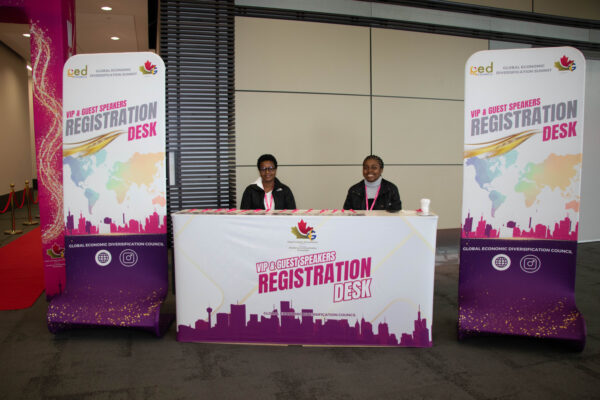


08:00 am - 09:00 am | Guests arrivals & registrations

Panel Overview: Public-Private Collaboration in Regional Growth

Regional prosperity depends on the strength of partnerships between governments, businesses, and community organizations. This panel explores how strategic collaboration between the public and private sectors can unlock innovation, attract sustainable investment, and retain local talent across diverse industries. By aligning regional priorities with business innovation and workforce development, these partnerships can bridge resource gaps, enhance competitiveness, and drive inclusive economic growth.
The discussion will highlight successful collaboration models from Canada and abroad, revealing how shared investment in infrastructure, digital transformation, and skills training can transform regions into thriving, future-ready economies.


Key Takeaways

  1. Collaborative Frameworks — Proven models for building strong public-private partnerships that accelerate innovation and regional development.

  2. Investment Attraction — How coordinated regional strategies can enhance investment readiness and support the growth of local industries.

  3. Talent Retention — Practical approaches for developing and retaining skilled, homegrown talent through education, innovation hubs, and community engagement.

Panel Overview: Inclusive AI & Automation for Economic Equity

As artificial intelligence (AI) and automation continue reshaping industries, the global challenge lies not in adopting these technologies—but in ensuring they serve everyone equitably. This session explores how AI can be a powerful tool for inclusive growth, empowering women, youth, and SMEs to thrive in the digital economy. Experts will examine real-world applications of AI in entrepreneurship, workforce development, and public policy, with a focus on bridging the digital divide and ensuring that automation enhances human potential rather than replaces it.
By centering inclusion at the core of AI strategy, this panel will highlight pathways for governments, investors, and innovators to create technology-driven economies that are fair, sustainable, and accessible to all.


Key Takeaways

  1. Equitable AI Adoption — How inclusive frameworks and policies can ensure AI development benefits underrepresented communities, including women and youth.

  2. Empowering SMEs — Practical strategies for small and medium enterprises to leverage AI and automation for competitiveness and innovation.

  3. Building Digital Resilience — The role of training, mentorship, and ethical governance in preparing the workforce for a future shaped by intelligent technologies.

Panel Overview: Workforce Transformation & Skills Trade

As the global economy evolves under the forces of digitalization, automation, and shifting trade dynamics, the demand for adaptable, skilled talent has never been greater. This panel explores how governments, industries, and educational institutions can collaboratively future-proof the workforce by embedding reskilling, digital literacy, and technical trades into regional development strategies. The discussion will examine innovative approaches to bridging the skills gap, empowering youth and underrepresented communities, and leveraging trades and technology as dual drivers of inclusive economic resilience. Participants will gain practical insights into how workforce transformation can sustain competitiveness, support diversification, and ensure long-term economic stability across regions.


Key Takeaways

  1. Reskilling for the Future — Learn how continuous learning programs and vocational training can meet the evolving demands of digital and green economies.

  2. Bridging Industry and Education — Explore models for aligning post-secondary education and trade programs with industry needs to build job-ready talent.

  3. Inclusive Workforce Development — Understand how equity-driven workforce strategies can empower women, youth, and newcomers to participate meaningfully in future industries.

Panel Overview: 


As the global economy becomes increasingly digital, the integration of technology, data, and connectivity is reshaping industries, markets, and communities. This panel explores how Canada—particularly Alberta and the Prairie provinces—can harness the power of the digital economy to drive inclusive, resilient, and future-ready growth. From artificial intelligence and fintech to e-commerce and creative media, the digital transformation presents opportunities to enhance productivity, enable cross-border trade, and create high-quality jobs.

Panelists will examine how digital ecosystems can empower women, youth, and SMEs, ensuring equitable participation in the rapidly evolving global marketplace. The discussion will also address key challenges, including digital infrastructure gaps, cybersecurity, and access to digital skills training, emphasizing strategies for scaling innovation and regional competitiveness.


Key Takeaways

  1. Bridging the Digital Divide: Understanding how equitable access to digital tools and infrastructure can unlock economic participation and innovation across urban and rural communities.

  2. Empowering SMEs and Entrepreneurs: Exploring how digital adoption, e-commerce, and tech innovation can expand market access and improve competitiveness for small and medium-sized enterprises.

  3. Future-Ready Workforce: Highlighting the importance of digital literacy, reskilling, and inclusive policies that prepare Canadians for the jobs of tomorrow in a rapidly transforming global economy.